LinkedIn lead generation works because the platform concentrates B2B decision-makers and converts visitors to leads at roughly three times the rate of other social channels. The winning approach combines native content, warm engagement and personalised outreach, not spray-and-pray automation.
For B2B, LinkedIn is not just another social network. It is the one place where your buyers, their bosses and the people who sign off the budget are all in the same room.
That makes it the most efficient social channel for pipeline, if you work it the right way. This guide covers the data behind LinkedIn lead generation and the tactics that actually produce meetings.
What is LinkedIn lead generation?
LinkedIn lead generation is the practice of using LinkedIn’s content, networking and outreach tools to find, engage and convert B2B prospects into qualified leads. It blends inbound content with targeted outbound conversation on a single platform.
The scale is the starting point. LinkedIn has more than 1.3 billion members, and crucially, the right ones for B2B.
Why LinkedIn works for B2B
The platform concentrates buying power like nowhere else. LinkedIn counts 63 million decision-makers and 10 million C-level executives, and says four out of five members drive business decisions.
Marketers agree it delivers. In the Content Marketing Institute’s 2025 benchmarks, 85% of B2B marketers said LinkedIn delivers the best value, far ahead of Facebook (28%), YouTube (22%) and Instagram (21%).
And usage is climbing. The same research found 68% of B2B marketers increased their LinkedIn use in the prior year, more than any other channel.
The data: LinkedIn converts better
Effectiveness, not just reach, is what sets LinkedIn apart. The conversion gap versus other social platforms is large.
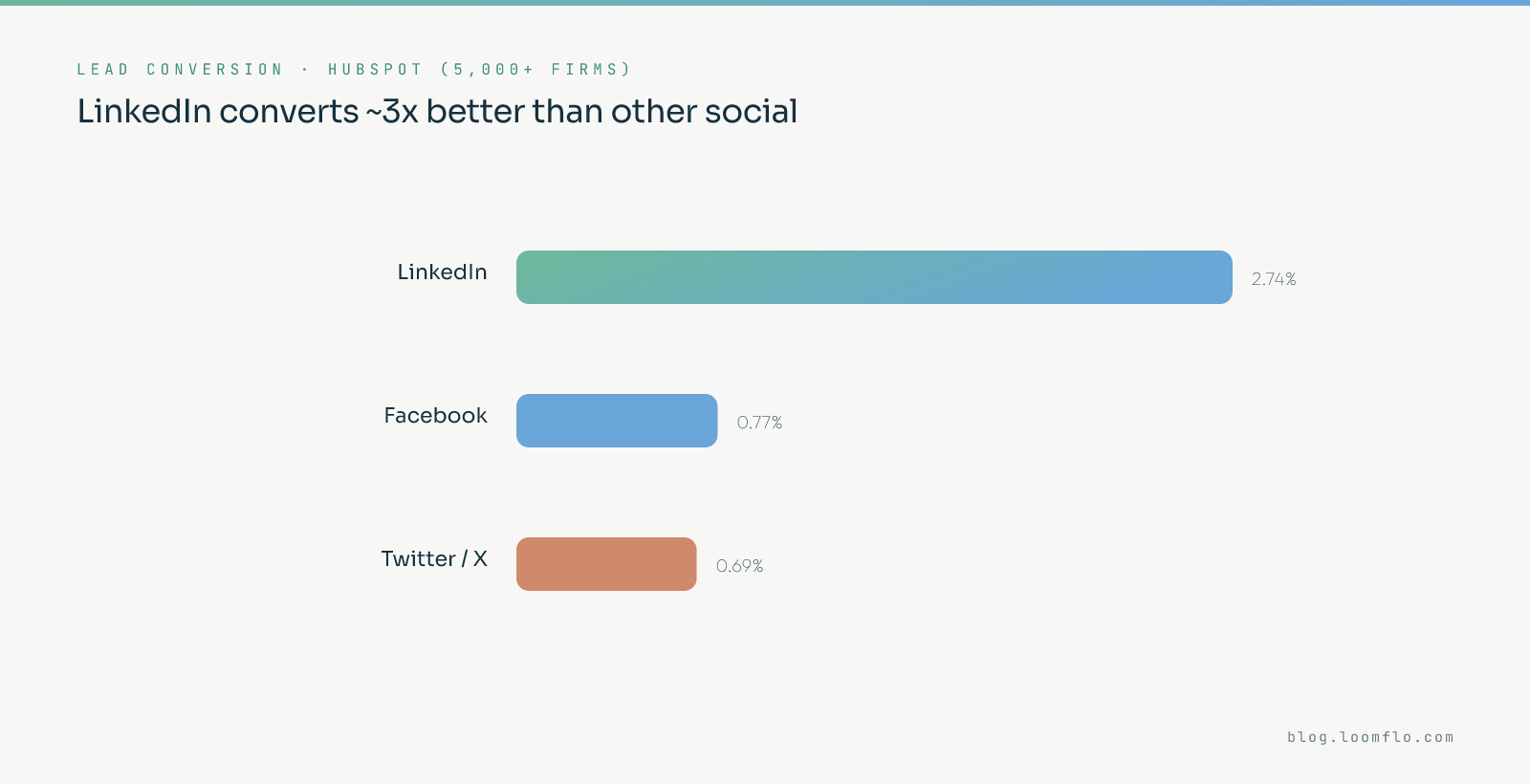
HubSpot’s study of more than 5,000 businesses found LinkedIn converts visitors to leads at 2.74%, about 277% higher than Twitter/X (0.69%) and Facebook (0.77%).
It dominates B2B social specifically. LinkedIn’s own data attributes 80% of B2B social-media leads to the platform, and 89% of B2B marketers use it for lead generation, with 62% saying it produces leads.
The LinkedIn lead generation system
A pipeline on LinkedIn is built, not stumbled into. It runs in a deliberate order.
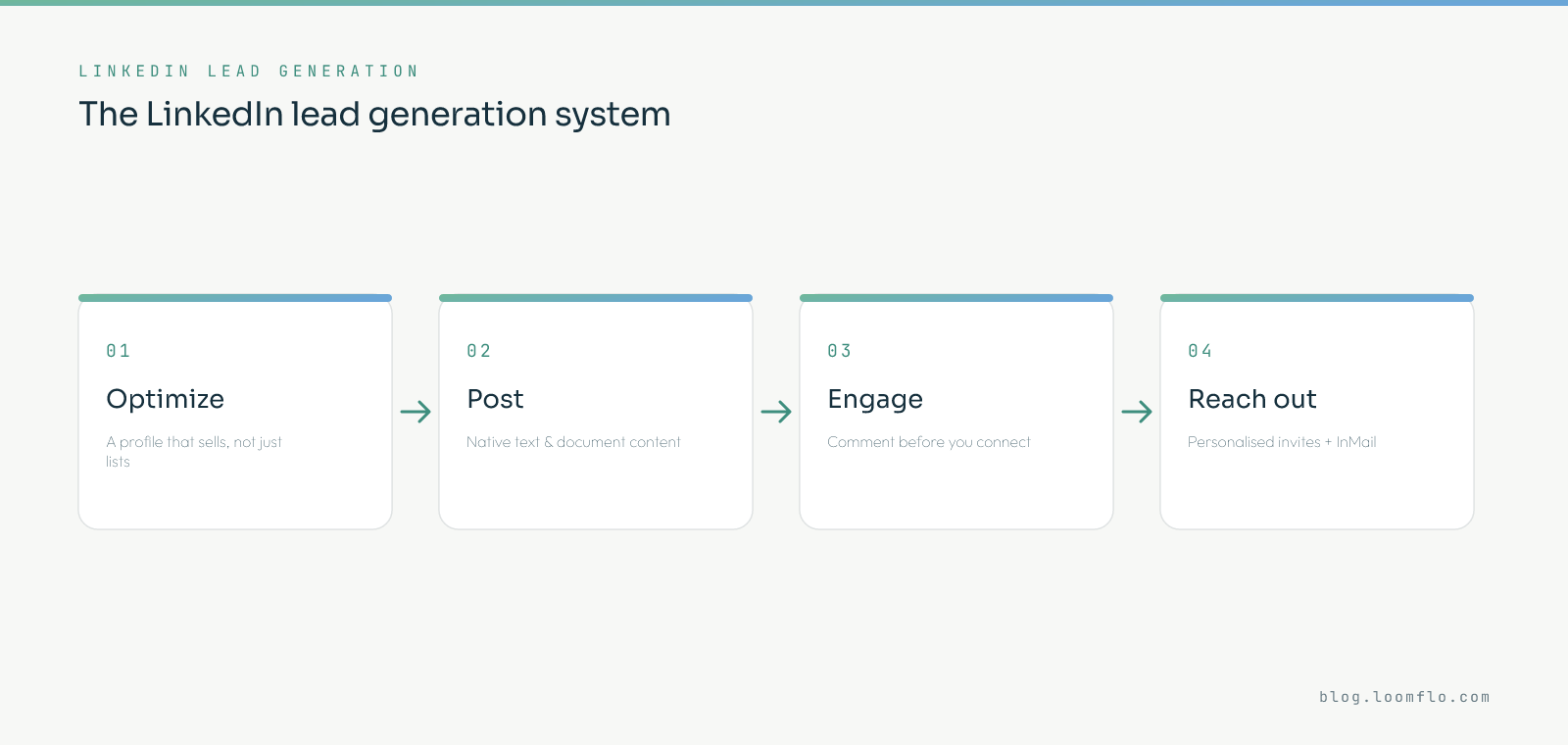
1. Optimise your profile
Your profile is the landing page for every interaction. Make it speak to your prospect’s problem, not just list your job title.
2. Post native content
Content warms the audience before you ever reach out. Nearly 70% of LinkedIn users engage with brand content weekly, and native text posts drive the most engagement at 51%, so favour text and document posts over outbound links.
3. Engage before you pitch
Comment and react on a prospect’s posts before sending a request. Warm, relevant outreach is what separates social selling from spam.
4. Reach out personally
Outreach is where the lead is won or lost, and personalisation decides it. Personalised connection requests hit 35–45% acceptance versus around 15% for generic ones, per Expandi’s analysis of 70,000+ campaigns.
InMail vs cold email
For direct outreach, LinkedIn’s channel has an edge. LinkedIn reports InMail messages get roughly a 300% higher response rate than cold email.
That advantage compounds with relevance. The same personalisation that lifts acceptance rates also lifts replies, generic templates underperform on every metric.
How to automate LinkedIn lead generation safely
Automation can scale the work, but LinkedIn polices it hard. The goal is to scale personalisation, not blasting.
Stay within human-like limits. Practitioner consensus puts the safe ceiling around 100 connection requests a week, roughly 20–30 a day, with new accounts warmed up gradually.
Watch what triggers flags. Sudden activity spikes, low acceptance rates and obvious automation patterns are the main causes of restriction, so quality and pacing protect your account.
This is the same principle behind safe outbound everywhere. For the email side of the same discipline, see our guide on AI cold email, and for the full autonomous pipeline, our guide on AI lead generation.
A LinkedIn content strategy for lead generation
Content is what makes outreach work, because it warms prospects before you ever message them. That warmth is the difference between a reply and being ignored.
Lead with value, not links. Native text and document posts that teach something earn the most engagement, while outbound links tend to get suppressed by the algorithm.
Post consistently. A steady cadence keeps you visible in your prospects’ feeds, and visibility makes your name familiar when you reach out.
Speak to one buyer. Content aimed at your exact ideal customer attracts the right followers, even if the audience is smaller.
Mix formats. Rotate insights, short stories, how-tos and the occasional opinion to keep the feed varied and engagement high.
How to write outreach that gets replies
Outreach is where most LinkedIn lead generation breaks down. The fix is relevance, not volume.
1. Personalise the opener
Reference something specific and true, a post, a role, a company change. Personalised requests hit 35–45% acceptance versus around 15% for generic ones.
2. Lead with them, not you
Open with their problem or context, not your pitch. The first message should earn a reply, not close a deal.
3. Keep it short
A few sentences beats a wall of text. Brevity respects their time and gets read.
4. Use a soft call to action
Invite a conversation, not a calendar booking. Lowering the ask raises the response rate.
Building a LinkedIn lead gen funnel
The strongest results come from connecting content and outreach into one funnel. Each stage feeds the next.
At the top, content builds awareness and credibility with your ideal audience. People who engage become warm prospects.
In the middle, you engage back, commenting on their posts and starting genuine conversations. This is social selling, not pitching.
At the bottom, personalised outreach converts the warmest prospects into calls. Because they already know you, the ask lands far better.
LinkedIn Lead Gen Forms and ads
For paid scale, LinkedIn’s own tools remove friction. Lead Gen Forms let prospects convert without leaving the platform, pre-filling their details from their profile.
That friction reduction matters. LinkedIn case studies show Lead Gen Forms roughly doubling conversion rates versus sending people to an external landing page.
Sponsored content and message ads extend reach. Used on top of an organic presence, they amplify a funnel that already works rather than replacing it.
Metrics to track
Measure the funnel, not just the vanity numbers. Followers feel good, but pipeline pays.
- Profile views and post engagement — your top-of-funnel warmth signal.
- Connection acceptance rate — is your targeting landing? Aim well above the ~15% generic baseline.
- Reply and positive-reply rate — the real measure of whether outreach is working.
- Meetings booked — the only number that maps directly to revenue.
Track those and LinkedIn becomes a predictable pipeline. Track followers alone and you are optimising for applause, not customers.
Common LinkedIn lead generation mistakes
Most failures come from treating LinkedIn like a cold-call list. A few patterns sink otherwise good efforts.
- Pitching on connection. Selling in the first message is the fastest way to get ignored or flagged.
- Generic templates. Mass, impersonal requests barely get accepted and rarely get replies.
- No content. Outreach from an empty profile with no posts has nothing to warm the prospect.
- Over-automating. Blowing past safe limits gets accounts restricted, undoing all the work.
- Chasing volume over fit. A hundred wrong prospects is worse than ten right ones.
Avoid those and the platform rewards you. LinkedIn lead generation is a relationship channel first and a numbers game second.
LinkedIn lead generation for small teams
You do not need a big team or budget to make LinkedIn work. For founders and small teams, it can be the single most efficient B2B channel.
Start with one strong personal profile. A founder posting genuine insight often out-performs a polished company page, because people engage with people.
Trade budget for consistency. Posting a few times a week and engaging daily costs time, not money, and time is the input the algorithm rewards.
Focus narrowly. A small team cannot chase everyone, so target one tight ideal customer and become a familiar name in that niche.
Layer outreach onto the content. Once your posts warm an audience, personalised connection requests convert far better than cold ones.
And scale only what works. Add light automation or ads to amplify a funnel that already produces conversations, never to paper over one that doesn’t.
Done this way, LinkedIn rewards effort over spend. A focused founder can build a real pipeline before ever paying for a single lead.
Frequently asked questions
Why is LinkedIn good for lead generation?
It concentrates B2B decision-makers, 63 million of them, and converts visitors to leads at about 2.74%, roughly three times better than other social platforms. That mix of audience quality and conversion is why 85% of B2B marketers rate it the best-value channel.
How many connection requests can I send on LinkedIn?
Practitioner consensus is around 100 a week, or 20–30 a day, with new accounts ramped up slowly. Exceeding that, especially with low acceptance rates, is a common trigger for restrictions.
Is InMail better than cold email?
For LinkedIn audiences, usually yes. LinkedIn reports InMail gets around 300% higher response rates than cold email, and personalised messages outperform generic ones on every channel.
Can I automate LinkedIn lead generation?
Yes, but carefully. Use automation to scale personalisation within human-like limits, not to blast generic templates, aggressive automation is the fastest way to get your account restricted.
How long does LinkedIn lead generation take to work?
Outreach can book meetings within weeks, while content-driven inbound builds over a few months. The two compound: content makes every outreach message land better over time.
Is LinkedIn lead generation only for big companies?
No — it is arguably better for small teams and founders. A single credible personal profile, posting consistently, can out-perform large brand pages because people engage with people.
Do I need LinkedIn Premium or Sales Navigator?
Not to start, but Sales Navigator helps at scale with better targeting and more InMail. Many founders build real pipeline on a free account first, then upgrade once it works.
What should I post on LinkedIn for lead generation?
Native text and document posts that teach your ideal customer something useful. Insights, short lessons and how-tos out-perform link posts, which the algorithm tends to suppress.
How often should I post on LinkedIn?
A few times a week, consistently, beats sporadic bursts. Regular posting keeps you visible in your prospects’ feeds and compounds your familiarity over time.
Are LinkedIn automation tools safe?
They can be, within human-like limits, roughly 100 requests a week and gradual warm-up. Pushing past those, or blasting generic templates, is what gets accounts restricted.
Does LinkedIn lead generation work without ads?
Absolutely — organic content plus personalised outreach is how most founders build pipeline. Ads and Lead Gen Forms amplify a working funnel, but they are not required to start.
What’s the difference between LinkedIn lead generation and cold email?
LinkedIn adds social context and warm engagement before the ask, while cold email reaches inboxes directly at scale. The strongest outbound programs use both together.
Should I use a personal profile or a company page?
Personal profiles win for lead generation, because people engage with people far more than with brand pages. Use the company page for credibility, but drive outreach and content from a real person.
How do I find leads on LinkedIn?
Use search and Sales Navigator filters to target your exact ideal customer by role, industry and company size. Then warm them with content and engagement before reaching out.
Turn LinkedIn into a pipeline
Loomflo’s AI Lead Generation finds, engages and books your ideal customers across channels, including LinkedIn, with personalisation at scale and none of the spam risk.