An MQL is a lead marketing thinks is interested; an SQL is a lead sales agrees is ready to buy. The gap between them is where pipeline leaks the average MQL-to-SQL conversion rate is just 13% (Implisit / First Page Sage), so how you define and hand off leads decides your revenue.
Most B2B teams argue about lead quality, and the argument usually traces back to two acronyms. Marketing celebrates MQLs; sales complains they aren’t ready.
Understanding MQL vs SQL and the handoff between them is how you stop that fight and fill the pipeline. This guide defines both, compares them, and shows where the leaks happen.
What is an MQL?
A marketing qualified lead (MQL) is a contact who has engaged with your marketing and meets a marketing-defined score for fit and interest but isn’t sales-ready yet. They’re researching, not buying.
Think of someone who downloaded an ebook, attended a webinar, or visited your pricing page a few times. They’re showing interest, but they haven’t asked to talk to sales.
MQLs are owned by marketing. The job at this stage is to nurture and educate until the lead is genuinely ready.
What is an SQL?
A sales qualified lead (SQL) is an MQL that sales has reviewed and accepted as showing real buying intent and fit. It’s cleared the bar for direct sales engagement.
An SQL has usually taken a stronger signal requested a demo, asked about pricing, or booked a call. They’re evaluating vendors, not just learning.
SQLs are owned by sales. The job now is to work the opportunity toward a close.
MQL vs SQL: the key differences
The cleanest way to see the distinction is side by side. The core shift is from marketing-owned interest to sales-owned intent.
| Dimension | MQL | SQL |
|---|---|---|
| Definition | Engaged with marketing, meets a fit/interest score | Vetted and accepted by sales as ready to buy |
| Funnel stage | Middle of funnel | Bottom of funnel |
| Owner | Marketing | Sales |
| Intent | Interested, researching | Ready to buy, comparing vendors |
| Example action | Downloaded an ebook, joined a webinar | Requested a demo, asked about pricing |
| Next step | Nurture until it crosses the SQL bar | Direct sales engagement → opportunity |
How a lead becomes an MQL, then an SQL
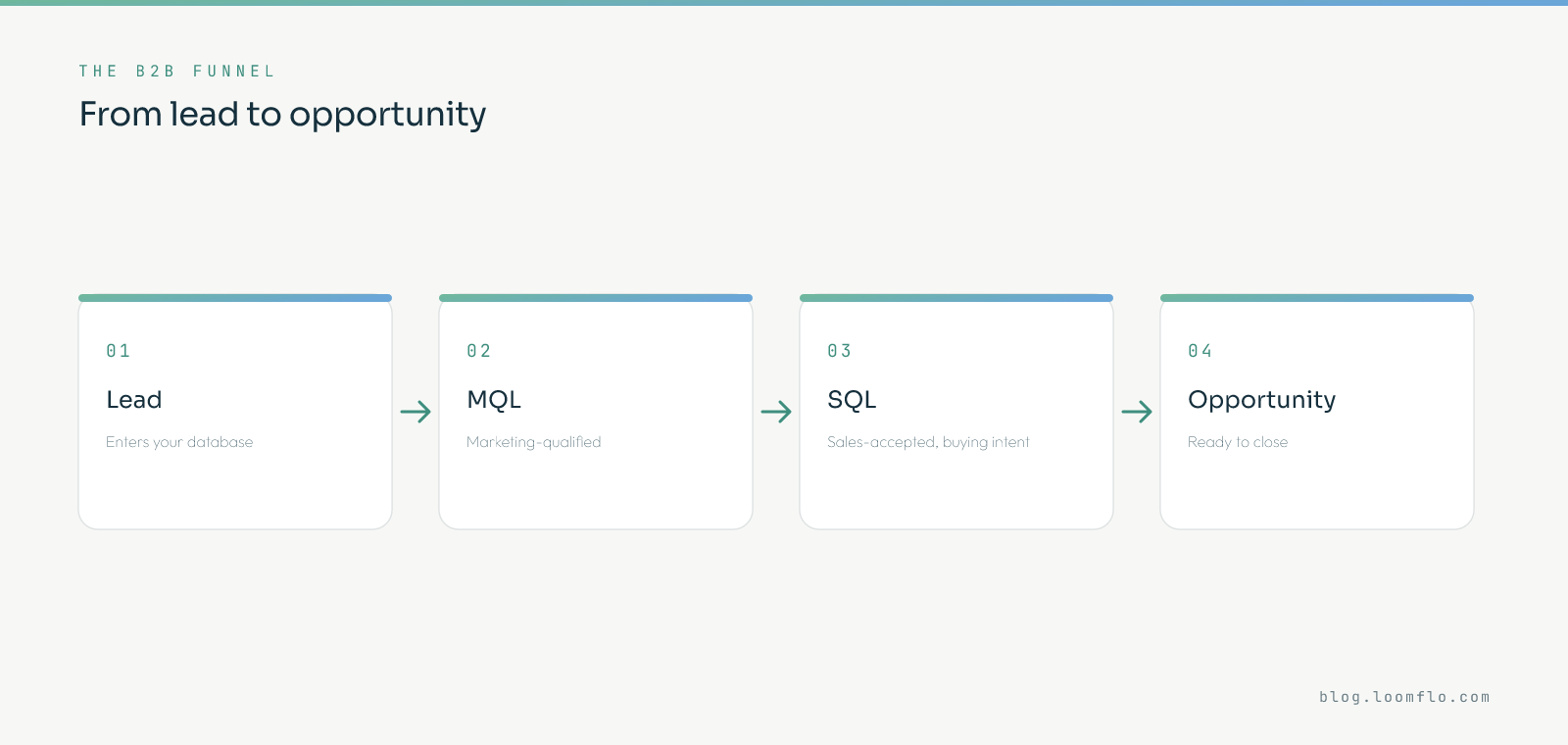
A lead doesn’t jump straight to sales-ready it graduates through stages. Lead scoring is the mechanism that moves it along.
Scoring works on two axes: fit (title, company size, industry the right person) and intent (demo requests, pricing views, repeat visits the right timing). Cross the marketing threshold and a lead becomes an MQL.
Between MQL and SQL sits a step teams often skip: the sales-accepted lead. This is the formal moment sales agrees a passed MQL meets the shared definition the gate that stops marketing from lobbing unready leads over the wall.
MQL-to-SQL conversion benchmarks
Knowing the benchmark tells you whether your funnel is healthy. The headline number is sobering but useful.
Across industries, the average MQL-to-SQL conversion rate is about 13%, and it takes an average of 84 days to convert (Implisit). That long timeline is why judging conversion within a single month is a common mistake.
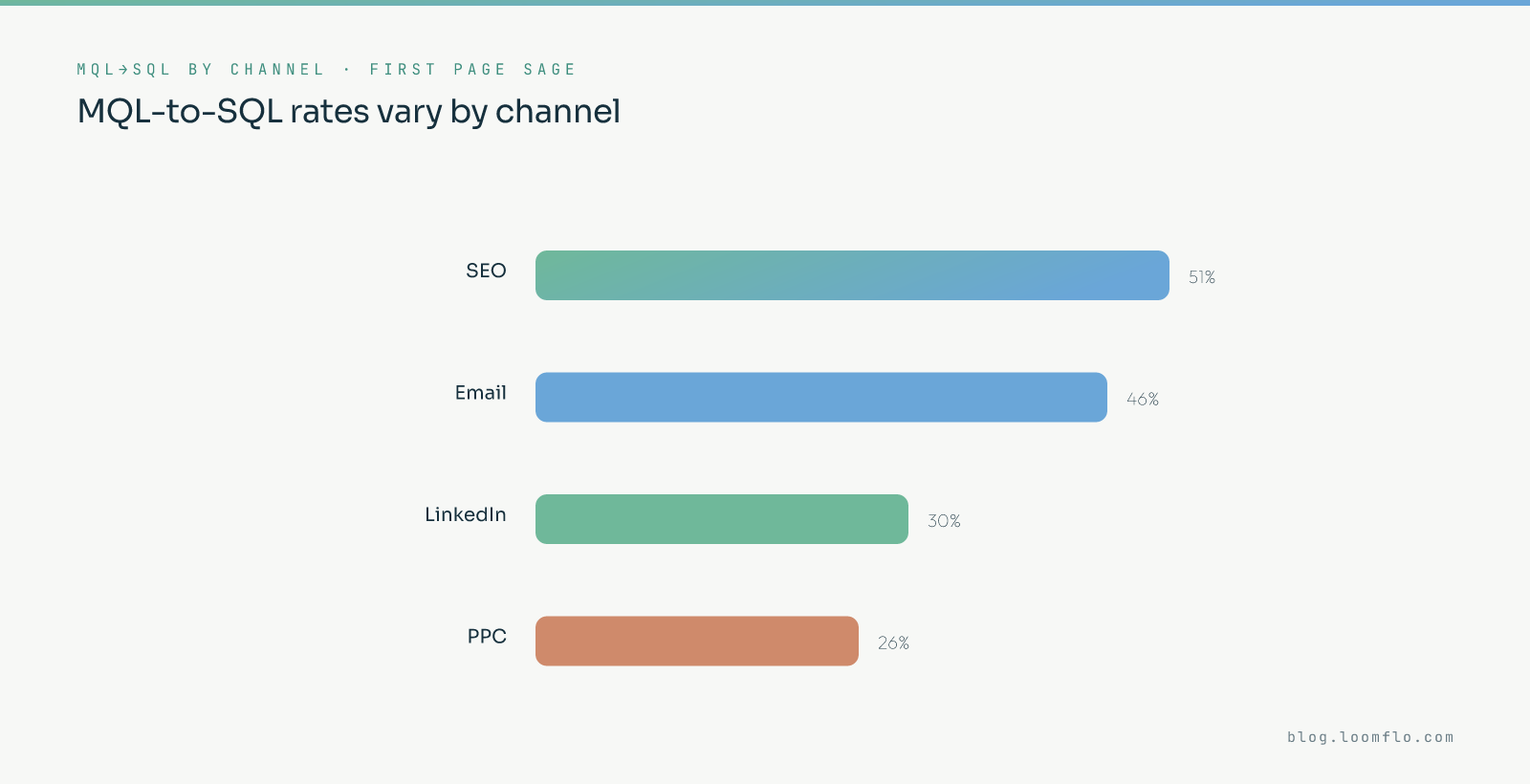
Channel matters enormously. First Page Sage found MQL-to-SQL rates range from 26% for PPC up to 51% for SEO, with email at 46% and LinkedIn at 30% where a lead comes from shapes how likely it is to qualify.
Why the handoff and alignment matter
The MQL-to-SQL handoff is where most pipeline quietly leaks. Misalignment between sales and marketing is expensive.
In a widely referenced MarketingSherpa benchmark, 61% of B2B marketers sent all leads straight to sales, but only about 27% of those leads were actually qualified. Sales then ignores much of what it’s sent, and fewer than 1% of leads ultimately close (Forrester).
Tight alignment flips that. Marketo found aligned sales and marketing teams generate 208% more marketing-attributed revenue and win 38% more deals the handoff is where that upside lives.
How AI improves lead qualification
AI doesn’t replace your MQL and SQL definitions it enforces and tunes them consistently. It fixes the specific leaks above.
Predictive lead scoring replaces static point rules with models trained on which past leads actually closed, improving qualification accuracy and MQL-to-SQL conversion. It catches buying signals a human would miss by reading behavior, product usage and third-party intent at scale.
It also auto-enriches records so fit scoring isn’t guesswork, and routes leads to the right rep the instant they cross the SQL threshold. That directly attacks the slow-follow-up and junk-MQL problems.
The honest framing: alignment is still a human agreement on what “qualified” means. AI operationalizes that agreement and keeps it consistent, so sales only gets leads worth working.
Common MQL and SQL mistakes
A few recurring errors keep funnels leaky. Each is fixable with a shared definition and better scoring.
- Chasing MQL volume: More MQLs mean nothing if they don’t convert quality beats quantity.
- No shared SQL definition: If sales and marketing don’t agree on “qualified,” the handoff breaks.
- Skipping the sales-accepted step: Without that gate, unready leads flood sales and get rejected.
- Ignoring time-to-convert: With an 84-day average, same-month conversion math misleads you.
Avoid these and the funnel tightens. The result is fewer, better leads that sales actually works.
Where MQL vs SQL fits
MQL and SQL are the stages that turn raw leads into revenue-ready conversations. Getting the definitions and handoff right is what makes your whole funnel efficient.
It connects directly to how you generate and route leads in the first place. See AI lead generation and why speed to lead matters the moment an SQL is ready.
Define both stages, align sales and marketing on the handoff, and let scoring do the sorting — that’s how a pile of leads becomes a predictable pipeline.
Frequently asked questions
What is the difference between an MQL and an SQL?
An MQL is a lead marketing considers interested based on engagement and fit; an SQL is a lead sales has accepted as ready to buy. MQLs are owned by marketing, SQLs by sales.
What is a good MQL-to-SQL conversion rate?
The cross-industry average is about 13% (Implisit / First Page Sage). Top channels like SEO can reach around 51%, so a “good” rate depends heavily on your source mix.
How do you turn an MQL into an SQL?
Through lead scoring on fit and intent, plus a sales-accepted step where sales agrees the lead meets the shared bar. Nurturing moves the lead until it crosses that threshold.
Who owns MQLs vs SQLs?
Marketing owns MQLs and nurtures them; sales owns SQLs and works them toward a close. The sales-accepted lead is the shared handoff between the two.
What comes after an SQL?
An SQL becomes an opportunity, then moves through proposal and negotiation to closed-won. First Page Sage puts SQL-to-opportunity conversion around 38–49%.
Is the MQL dead?
Not dead, but volume-only MQL chasing is rightly criticized, since fewer than 1% of leads close (Forrester). MQLs still help — as long as you optimize for quality and buying groups, not raw counts.
Send sales only the leads worth working
Loomflo builds AI growth infrastructure predictive scoring, enrichment and instant routing that turn raw leads into sales-ready SQLs, so your pipeline stops leaking.