
Content decay is the slow loss of traffic from pages that used to perform. It is not a penalty and usually not your fault the page stopped moving while the query, the competitors and the search engine kept moving. Refreshing an old post can lift its traffic by around 106% (HubSpot).
Publishing feels like progress because the library keeps growing. But a content library is not a monument. It is closer to a garden, and half of it is dying while you plant more.
Content decay is that quiet loss. This guide covers why it happens, how fast, how to spot it, and what to fix first.
What is content decay?
Content decay is the gradual decline in organic traffic to a page that previously ranked well, caused by the page staying still while everything around it changes. It is erosion, not a penalty.
The distinction matters because the response is different. A penalty needs a fix. Decay needs maintenance and maintenance is a schedule, not an emergency.
Why pages decay
Four forces do most of the damage, and only one of them is about your page.
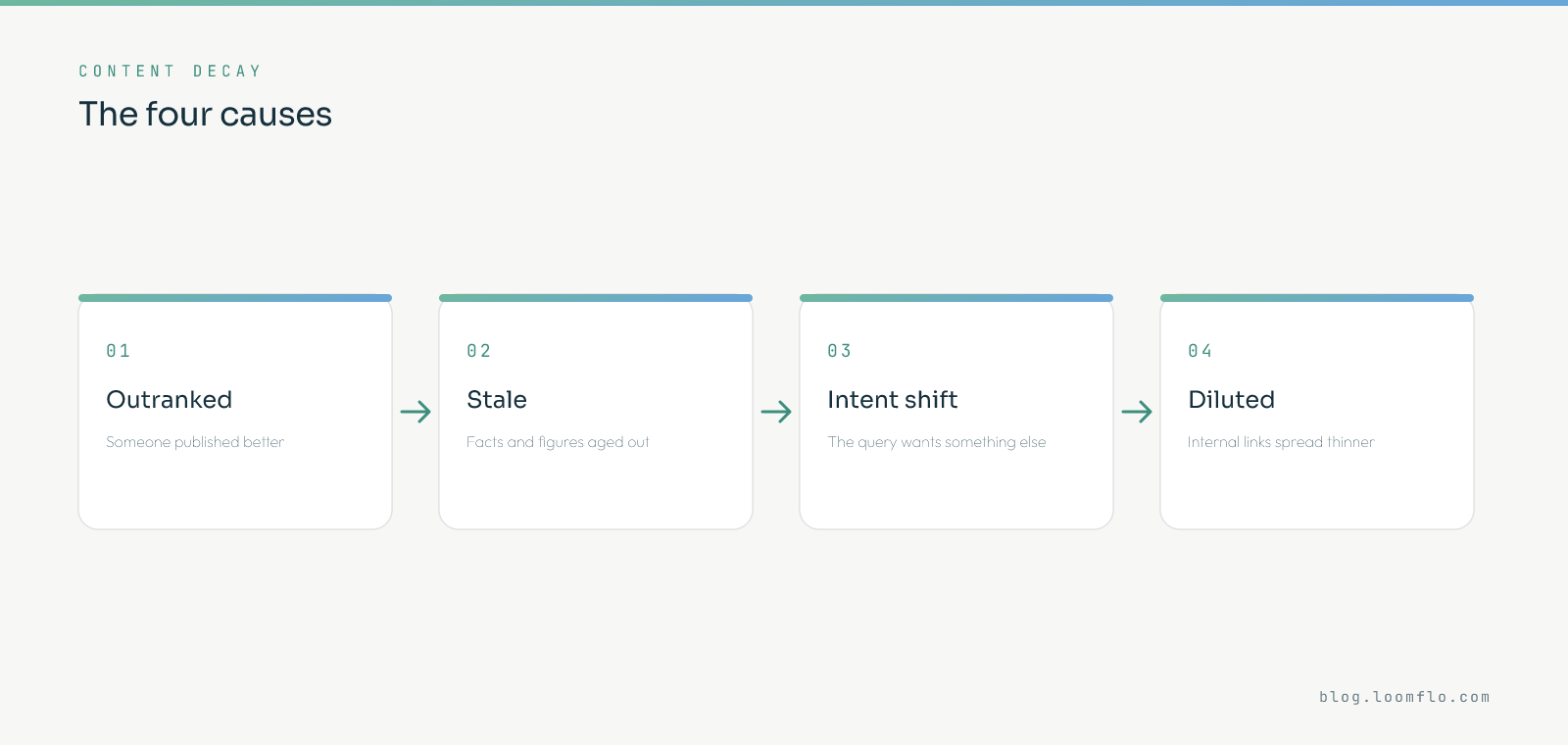
1. Someone published something better
The most common cause. Your page did not get worse; the field got stronger.
2. The facts went stale
Statistics, pricing, screenshots and years in the title all age. A 2023 figure on a 2026 query erodes trust before it erodes rankings.
3. Intent shifted
The words stayed the same but what people want from them changed. A query that wanted a definition now wants a comparison, and your definition page no longer answers it.
4. Internal links got diluted
Every new page you publish spreads the same internal authority thinner. Old winners quietly lose support as the library grows.
How fast it happens
Faster than most teams assume, and the pattern is measurable.
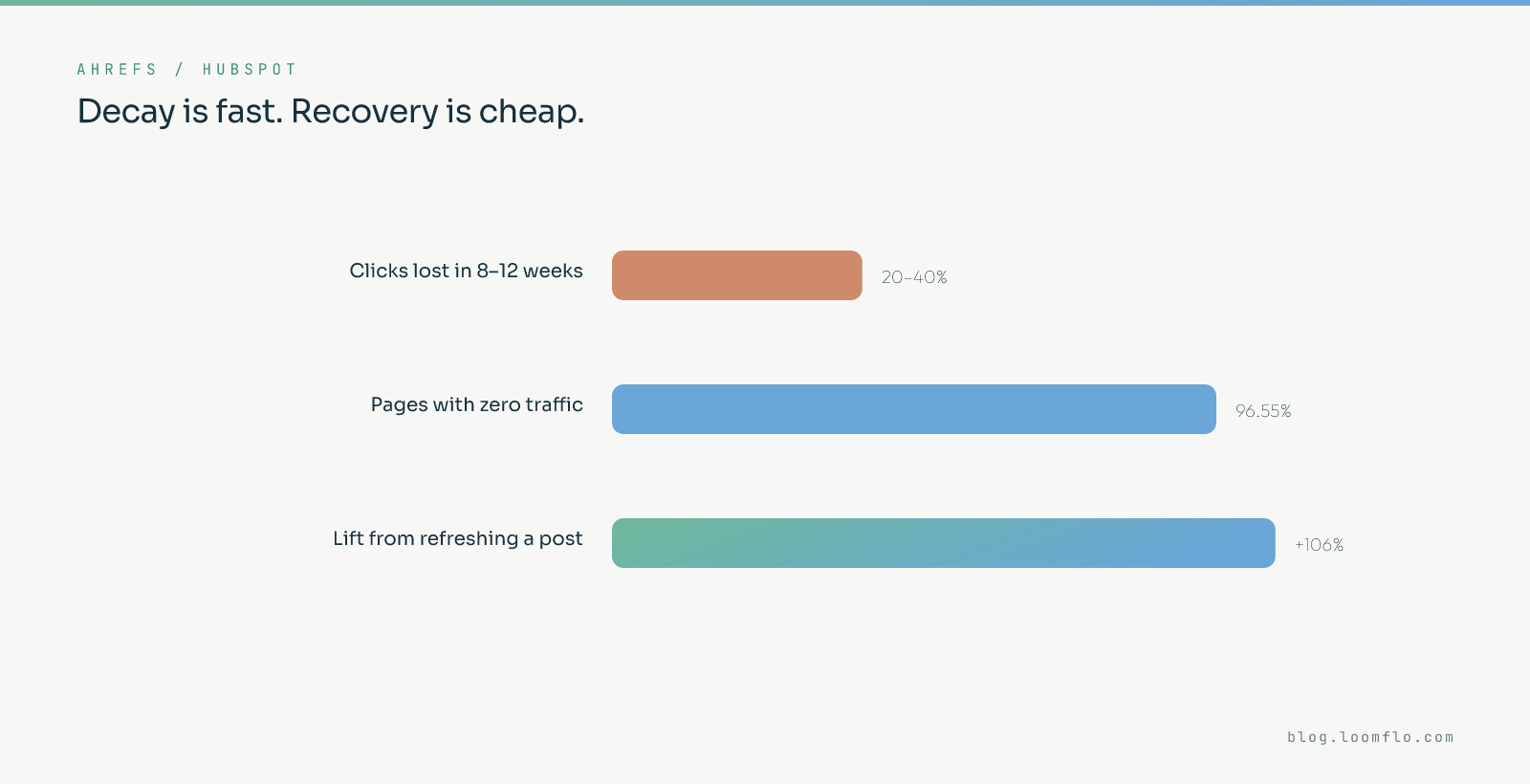
Ahrefs benchmarks content decay at a 20–40% drop in clicks over 8–12 weeks for affected pages. Set that against the backdrop that 96.55% of all web pages already get zero traffic from Google, and the margin for neglect is thin.
The upside is that recovery is cheap. HubSpot found that updating an existing post can lift its traffic by around 106% far better economics than writing something new and starting from nothing.
How to spot decaying pages
You cannot fix what you are not watching. A monthly pass over four signals catches almost everything.
- Clicks over a rolling 3-month window: Compare against the previous period, not against last week. Seasonality is noise.
- Average position drifting down: A slide from 4 to 8 costs far more traffic than the two-place gap suggests.
- Impressions holding while clicks fall: The classic signature of losing the snippet or being pushed below an AI summary.
- Publish date older than 12 months: Not decay by itself, but the right place to look first.
What to refresh first
Not every decaying page deserves the effort. Prioritise ruthlessly.
- Pages that were winning: A page that fell from position 3 has proven it can rank. One that never cracked 40 has not.
- Pages close to the fold: Positions 5–15 have the most traffic to recover per hour of work.
- Pages tied to revenue: A decaying page on a commercial query costs more than a decaying page on a curiosity.
- Consolidate rather than refresh: Three thin pages competing for the same query should usually become one strong page with redirects.
What a real refresh involves
Changing the date is not a refresh, and search engines are not fooled by it.
Re-check the page against the current top results and find what they answer that you do not. Update every statistic and name the source year. Rewrite the introduction for how the query reads today. Add the sections the intent now demands, and cut the ones nobody wanted.
Then rebuild internal links to it from newer, relevant pages the support it quietly lost as your library grew.
How AI keeps the library current
Content decay is a maintenance problem, and maintenance is where humans reliably lose interest. That makes it a good automation target.
A monitoring system can watch every page’s clicks, position and impression trend continuously and flag the ones sliding, ranked by recoverable traffic so nobody has to remember to check. Comparing your page against the current top results surfaces the specific gaps to close rather than a vague instruction to “improve it.”
The honest caveat: automated rewrites of pages nobody re-reads is how you end up with a large, generic library that decays faster. Use the system to find and diagnose; keep a human on the judgement about what the page should now say.
Where decay fits
Content decay is the maintenance half of content strategy. Publishing is the other half, and most teams only do that one.
It matters most where volume is highest see how programmatic SEO makes scheduled refreshing mandatory rather than optional, and how topical authority depends on a library staying current, not just large. For pages worth saving, content repurposing extends the life of the work you already did.
Watch the trend, prioritise the recoverable, refresh properly. A library that maintains itself compounds; one that only grows quietly rots.
Frequently asked questions
What is content decay?
Content decay is the gradual loss of organic traffic to a page that used to rank well, caused by competitors improving, facts going stale, intent shifting, or internal links being diluted as the site grows.
How fast does content decay?
Affected pages commonly lose 20–40% of clicks within 8–12 weeks (Ahrefs). The slide usually starts well before anyone notices it in a monthly report.
Is content decay a Google penalty?
No. It is erosion rather than punishment your page stayed the same while the competition, the query and the results page all moved. No manual action is involved.
How often should I refresh content?
Audit monthly and refresh on the signal rather than the calendar. As a default, review anything older than twelve months, and anything sliding in position regardless of age.
Does updating the publish date help?
Not on its own. Changing the date without changing the content is transparent to search engines and does nothing for the underlying problem, which is that the page no longer answers the query best.
Should I refresh or rewrite?
Refresh pages that once ranked and have slipped they have proven intent match. Rewrite or consolidate pages that never ranked, since the problem there is the page, not its age.
Stop your best pages from quietly dying
Loomflo builds AI growth infrastructure continuous monitoring that flags decaying pages and shows exactly which gaps to close.