Organic search is still the biggest traffic channel, 53% of all website traffic (BrightEdge), but 96.55% of pages get zero of it (Ahrefs). To increase organic traffic you have to win on intent, depth, links, freshness and internal structure, and adapt to AI search.
Organic traffic is the most valuable channel most businesses under-invest in. It compounds, it converts, and unlike ads, it doesn’t stop the moment you stop paying.
But it is also brutally competitive. This guide lays out the strategies that actually move organic traffic in 2026, each backed by data, not opinion.
Why organic traffic matters
The case starts with share of traffic. BrightEdge found organic search drives 53% of all website traffic, more than every other channel combined, and far ahead of paid search at 15%.
The catch is how concentrated the rewards are. Ahrefs studied around 14 billion pages and found 96.55% get zero traffic from Google.
So publishing is not a strategy. The work below is what moves a page from the silent 96% into the small share that actually earns traffic.
Aim for the top 3, not just page one
Ranking on page one is not enough, position within it decides everything. The drop-off is steep.
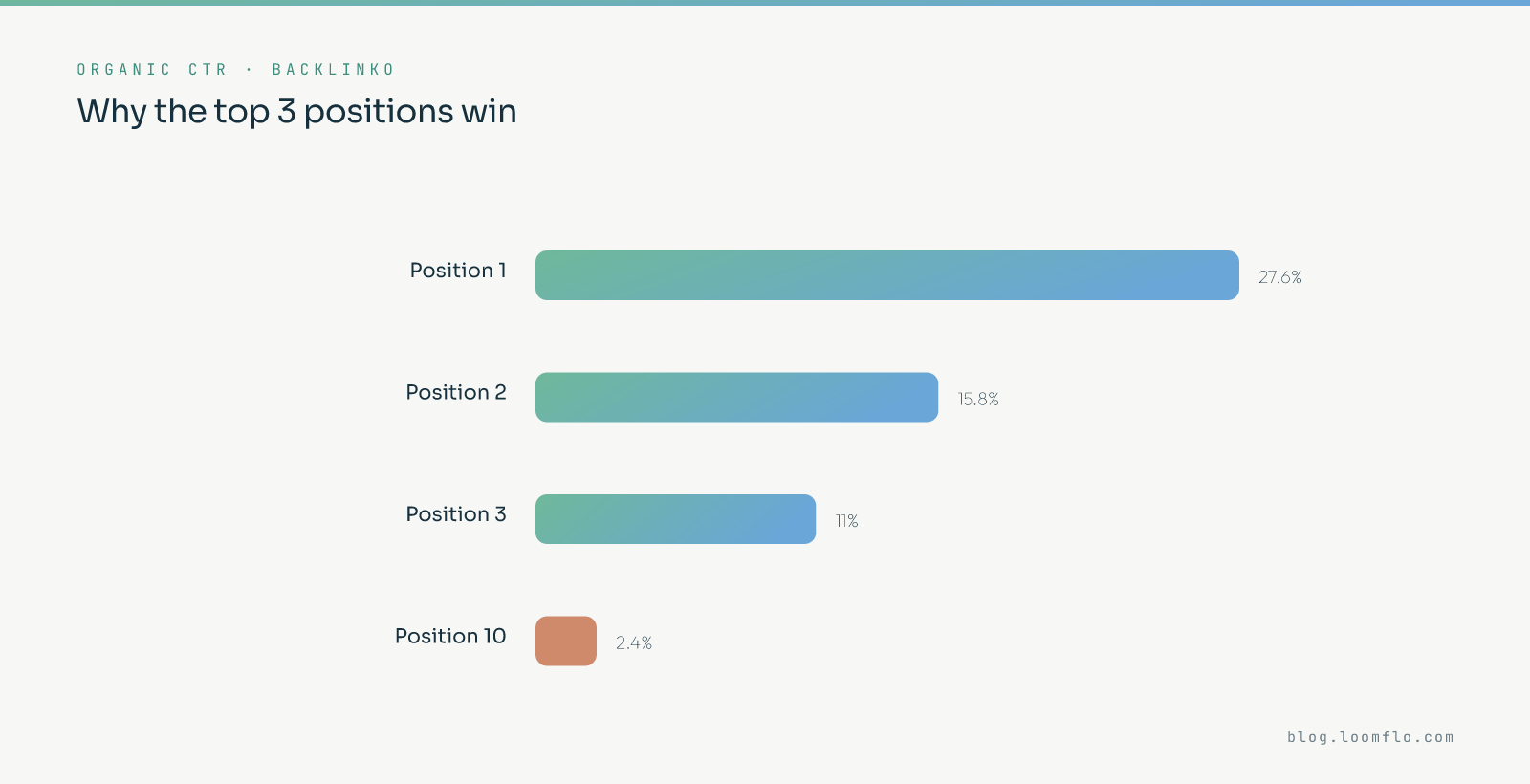
Backlinko’s analysis of four million results found the #1 result earns a 27.6% average click-through rate, roughly ten times position ten.
And page two is effectively invisible. Only 0.63% of searchers ever click through to the second page, so anything below the top ten earns almost nothing.
The strategies that actually work
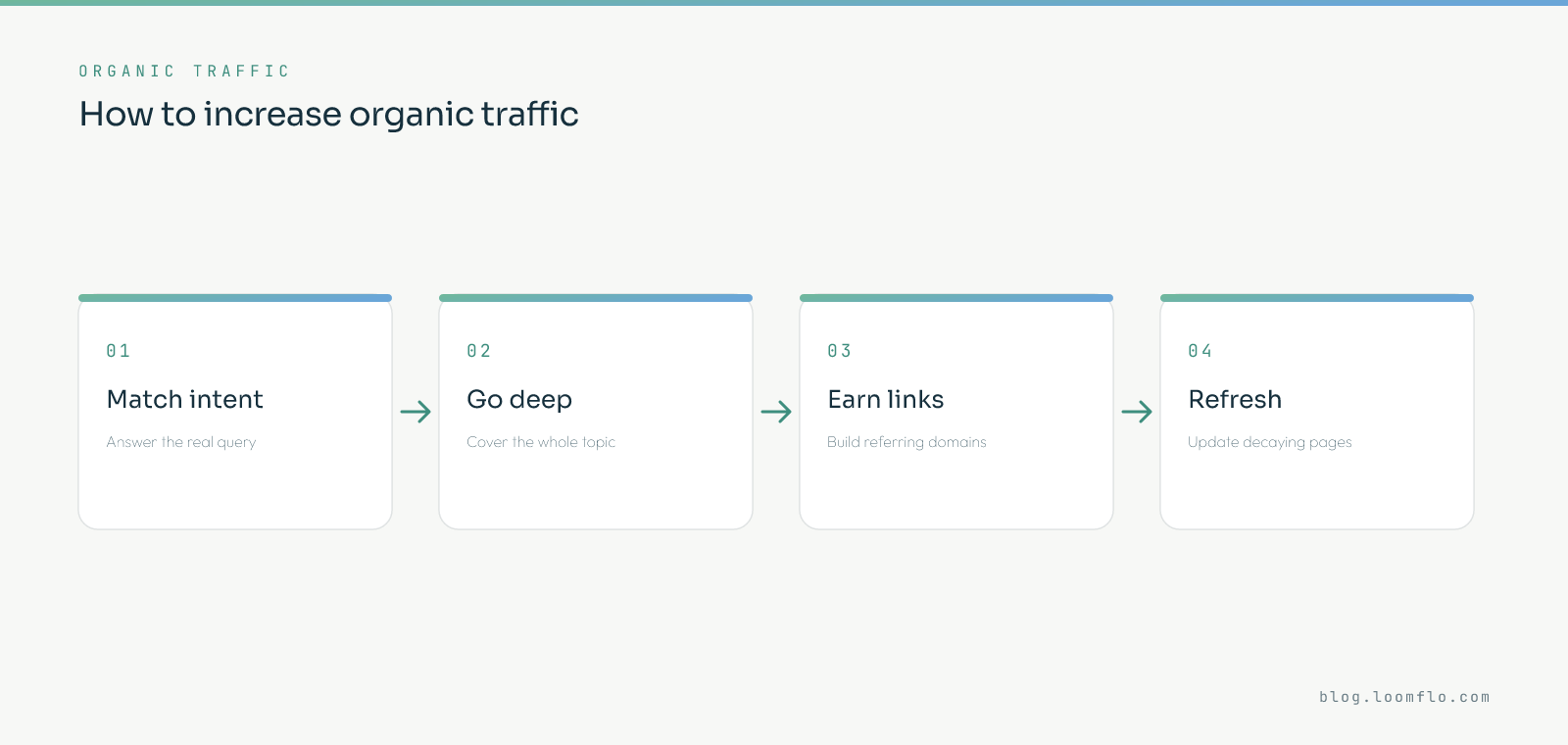
There is no single trick. Increasing organic traffic is a handful of fundamentals done consistently.
1. Match search intent
Before anything else, answer the actual query behind the keyword. A page that matches intent precisely outranks a “better” page that misses it.
2. Write comprehensive, in-depth content
Depth wins links and rankings. Backlinko found 3,000+ word content earns 77.2% more backlinks than short posts, though depth, not raw word count, is what matters.
3. Earn referring domains
Links remain a primary differentiator. The #1 result has 3x more referring domains than positions 2–10 (Backlinko), and over 90% of pages have no backlinks at all (Ahrefs), so links are how you stand out.
4. Refresh decaying content
Updating beats publishing more. HubSpot found refreshing and republishing old posts increased their organic views by an average of 106% and more than doubled their leads.
5. Target the long tail and build topic clusters
Most demand is specific. Over 92% of keywords get ten or fewer searches a month (Ahrefs), and 15% of daily Google searches are brand-new, so clusters of specific, intent-matched pages capture huge aggregate volume.
6. Strengthen internal linking
Internal links concentrate authority around your most important pages. Building content hubs that point to pillar pages is one of the most reliable ways to lift a whole topic’s rankings.
Adapt to AI search
The biggest change to organic traffic in 2026 is the AI answer. It is reshaping what a click is worth.
Pew Research found that when an AI Overview appears, users click a traditional result in only 8% of searches, versus 15% without one — and just 1% click a link inside the summary.
The coverage is significant and growing. Semrush found AI Overviews appear for around 16% of queries, with about nine in ten being informational.
So the strategy splits. Earn citations in AI answers for informational queries, and double down on the transactional, comparison and hands-on searches that AI Overviews don’t fully satisfy.
How long does it take to increase organic traffic?
Honestly, months, and that is the point. Organic traffic compounds, which is why it beats paid over time but rarely spikes overnight.
Early structural and refresh wins can show within weeks. But the durable growth comes from a consistent program of intent-matched content, links and maintenance run over quarters.
That patience is also your advantage. Most competitors quit during the slow part, which is exactly why the ones who don’t pull away.
Common mistakes that stall organic traffic
A few avoidable errors keep sites stuck. Each one wastes effort that could compound.
- Publishing without maintaining. New posts without refreshing old ones means traffic quietly decays faster than you add it.
- Chasing volume over intent. High-volume keywords you can’t match the intent for never convert into rankings.
- Thin content. Shallow pages join the 96% that get nothing, no matter how many you publish.
- Ignoring links. With most pages having zero backlinks, never earning any leaves you stuck behind those who do.
- Pretending AI search isn’t happening. Optimising only for blue links cedes the growing share of AI answers to competitors.
Make it a system, not a sprint
Increasing organic traffic is not a one-time campaign, it is a system run continuously. Research, create, link, refresh, repeat.
That is the compounding logic behind durable growth. For how to run that loop without manual busywork, see our guide on automating SEO, and for winning both Google and AI answers, AEO vs SEO.
Done as a system, organic traffic becomes your cheapest, highest-converting channel, one that keeps producing long after the work is done.
Technical SEO that protects your traffic
You can’t increase organic traffic if search engines can’t crawl, index or load your pages. Technical SEO is the floor everything else stands on.
Make sure your important pages are indexable. A stray noindex tag or a blocked path can quietly erase pages from search entirely.
Keep the site fast and mobile-friendly. Page experience is a ranking factor, and slow, clunky pages lose both rankings and the visitors who do arrive.
Fix what breaks silently. Broken links, redirect chains, duplicate content and orphan pages all bleed authority — a regular crawl catches them before they cost you.
And submit a clean sitemap. Helping search engines discover and prioritise your pages is a small task with an outsized payoff.
On-page optimisation essentials
On-page SEO is how you tell search engines, and readers, what a page is about. Small, consistent improvements compound.
- Title and meta description. Write a compelling, keyword-relevant title; it heavily influences both rankings and click-through.
- Clear heading structure. Use descriptive H2s and H3s so the page is easy to scan and easy to parse.
- Lead with the answer. Give the core answer early, which helps both readers and AI engines that quote you.
- Internal links. Point related pages at each other to spread authority and keep readers moving.
- Descriptive image alt text. Helps accessibility, image search, and topical relevance.
None of these are dramatic on their own. Done across every page, they’re the difference between content that ranks and content that almost ranks.
How to track organic traffic growth
You can’t improve what you don’t measure, and organic traffic needs the right metrics, not just a total visit count.
Watch impressions and average position in Google Search Console. Rising impressions with flat clicks often means you’re showing up but not ranking high enough yet.
Track clicks by query and page. This shows which content is winning and which needs a refresh or a better intent match.
Monitor your share of the top three. Because click-through collapses below position three, movement into the top spots is what actually grows traffic.
And keep an eye on AI-search visibility. As AI Overviews spread, being cited in answers is a new signal worth tracking alongside rankings.
Build topic clusters and pillar pages
One of the most reliable ways to increase organic traffic is structure, not just volume. Topic clusters turn scattered posts into authority.
A cluster is a central pillar page on a broad topic, supported by detailed articles on its sub-topics. They all link to each other.
This does two things at once. It captures the long tail of specific queries, and it concentrates internal authority on the pillar so the whole topic ranks better.
It also matches how AI engines assess coverage. Pages that thoroughly answer a topic and its related questions are the ones that rank — and get cited.
Search intent is the foundation
Every strategy here depends on one thing: matching search intent. It’s the difference between a page that ranks and one that doesn’t.
Intent is the real goal behind a query, to learn, to compare, or to buy. A page that nails the intent beats a more polished page that misses it.
So before optimising anything, ask what the searcher actually wants. Build the page to deliver that, then layer depth, links and structure on top.
Frequently asked questions
How do I increase organic traffic?
Match search intent, write in-depth content, earn referring domains, refresh decaying pages, target long-tail clusters, and strengthen internal links, then adapt to AI search. Consistency across these fundamentals is what moves the needle.
How long does it take to grow organic traffic?
Usually months, because organic traffic compounds rather than spikes. Structural and refresh wins can appear in weeks, but durable growth comes from a consistent program run over quarters.
Is organic traffic still worth it with AI search?
Yes. Organic is still 53% of all traffic, and while AI Overviews reduce some clicks, they create a new opportunity to be cited, and plenty of transactional and comparison searches AI doesn’t fully answer.
What’s the fastest way to increase organic traffic?
Refreshing existing content that’s slipping, HubSpot found it lifts organic views ~106% on average. It’s faster than publishing new pages because those URLs already have history and authority.
Why do most pages get no organic traffic?
Because 96.55% of pages get zero Google traffic, usually due to weak intent match, thin content, or no backlinks (over 90% of pages have none). The strategies above are how you avoid that fate.
How much content do I need to increase organic traffic?
Quality and coverage matter more than raw count. A focused cluster of intent-matched, in-depth pages beats a large pile of thin ones — since 96.55% of pages get no traffic at all.
Do backlinks still matter for organic traffic?
Yes. The #1 result has 3x more referring domains than positions 2–10, and most pages have none, so earning links remains a primary way to stand out.
Should I focus on new content or updating old content?
Often updating wins. Refreshing decaying pages lifted organic views ~106% on average (HubSpot), and it’s faster because those URLs already have authority and history.
What’s the single most important factor for organic traffic?
Matching search intent, then earning the authority, depth and links, to rank for it. Everything else amplifies a page that already answers the query.
Can I increase organic traffic without backlinks?
For low-competition, long-tail queries, often yes. For competitive terms links still matter a lot, the #1 result has 3x the referring domains of positions 2–10.
How does AI search affect organic traffic?
AI Overviews reduce clicks on some informational queries, 8% versus 15% when one appears (Pew), but create a new chance to be cited. Transactional and comparison searches still drive strong organic clicks.
What’s a realistic organic traffic growth rate?
It varies widely by niche and starting point, but steady month-over-month gains compounding into large yearly growth is the pattern. Organic rewards consistency over quick spikes.
Does page speed affect organic traffic?
Yes. Page experience is a ranking factor, and slow pages lose both rankings and the visitors who do arrive, so technical health protects the traffic your content earns.
Is organic traffic free?
There’s no per-click cost like ads, but it takes investment in content, links and maintenance. The payoff is traffic that keeps compounding long after the work is done.
Grow organic traffic on autopilot
Loomflo’s HEO system runs the whole loop, research, content, internal links, refreshing and AI-search optimisation, so your organic traffic compounds without the manual work. First articles live in 30 days, or you don’t pay.