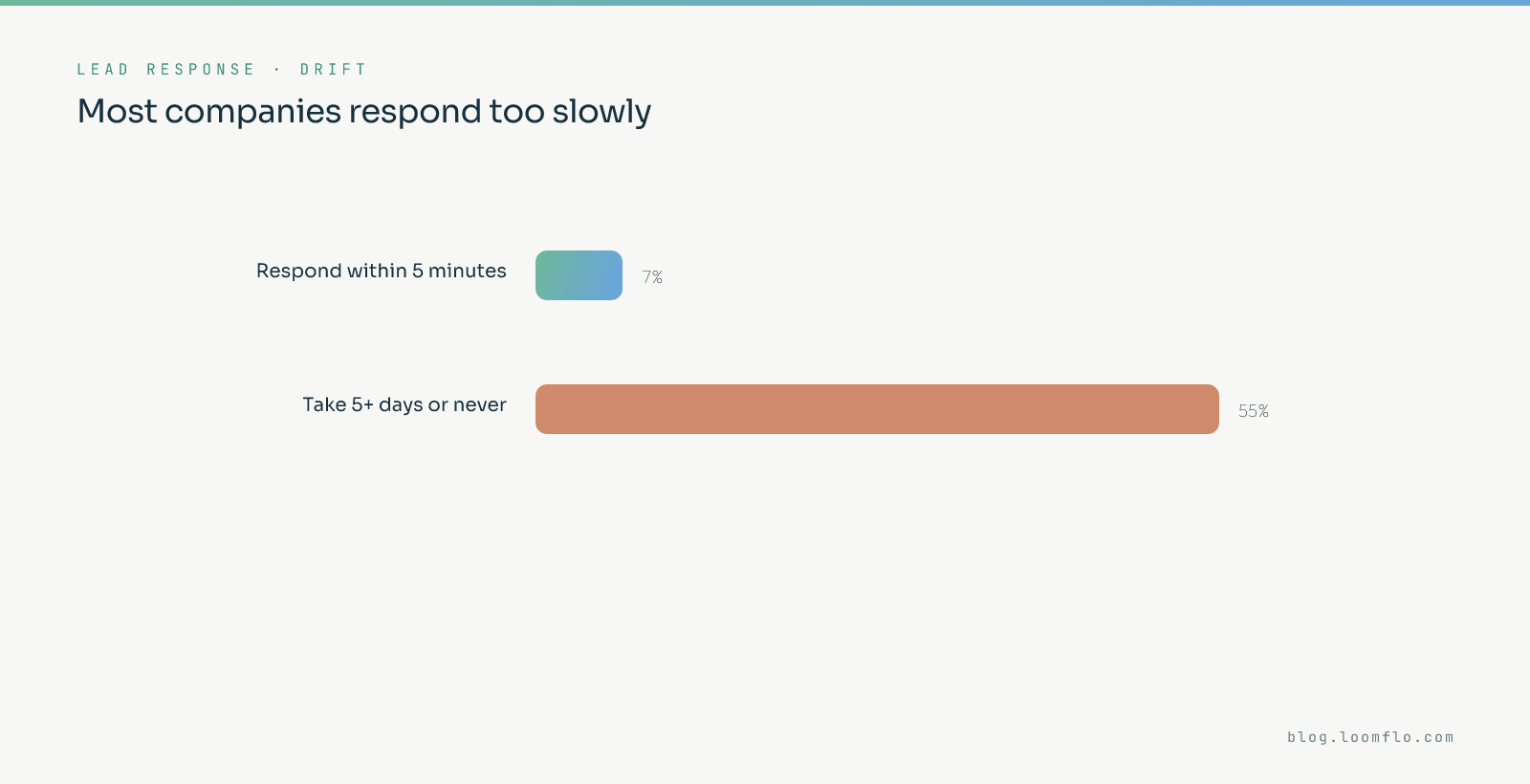
Speed to lead is how fast you respond after someone shows interest, and minutes matter enormously. Contacting a lead within 5 minutes makes you 21x more likely to qualify it than waiting 30 (MIT), yet only 7% of companies respond that fast (Drift) so speed alone is a competitive edge.
Every inbound lead arrives with a short window of hot intent. Wait too long and that intent cools, or a faster competitor gets there first.
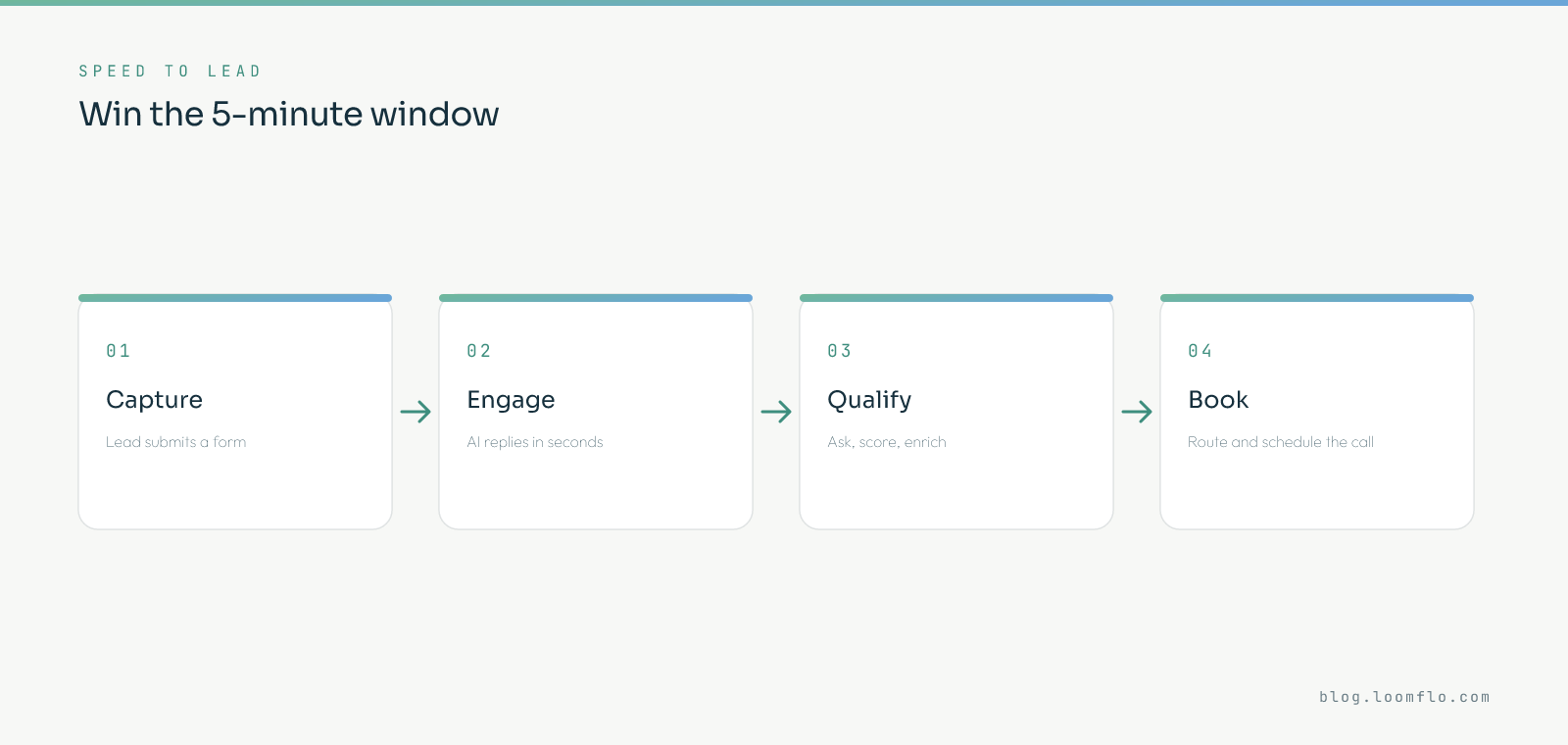
Speed to lead is the discipline of shrinking that window to near zero. This guide covers the data behind it, why most companies are slow, and how to respond instantly.
What is speed to lead?
Speed to lead, also called lead response time, is the elapsed time between a prospect showing interest a form fill, demo request or chat and your first meaningful response. It measures how fast interest gets met with engagement.
The reason it matters is timing. Intent peaks the moment someone submits, when your solution is top of mind and they’re often comparing you against competitors right then.
The data: why minutes matter
The research on lead response time is remarkably consistent, and the numbers are dramatic. Speed isn’t a nicety it changes outcomes.
The foundational MIT/InsideSales study found that contacting a lead within 5 minutes rather than 30 made you 21x more likely to qualify it, and 100x more likely to even make contact. That’s the origin of the famous five-minute rule.
Harvard Business Review’s audit of 2,241 companies added more. Responding within an hour made firms 7x more likely to have a meaningful conversation than waiting just one hour longer, and 60x more likely than those who waited a day.
The first responder wins
Speed doesn’t just improve qualification it often decides who wins the deal. Buyers reward whoever shows up first.
Research widely cited across the industry finds that 78% of customers buy from the company that responds first to their inquiry. Being fastest is frequently the whole advantage.
Platform data reinforces it. Velocify’s analysis found calling a lead within the first minute can lift conversions by up to 391% the payoff for speed is front-loaded into those opening seconds.
Why most companies are painfully slow
Despite the evidence, most companies respond far too slowly. The gap between best and typical is enormous.
When Drift submitted real leads to 433 B2B companies, only 7% responded within five minutes, and 55% took five or more business days or never replied at all. The average response time in the classic HBR study was around 42 hours.
The causes are structural, not lazy. Leads sit in inboxes and CRMs over nights and weekends, manual routing adds hours, and a 9-to-5 team simply can’t cover the moment most leads arrive.
The real cost of slow response
A slow response quietly wastes everything upstream of it. The damage compounds.
You paid to generate the lead, but a competitor who responds first captures the sale so your ad spend funds their pipeline. Every cold lead is acquisition cost with nothing to show for it.
The worst part is invisibility. These losses don’t show up as a line item; they just look like leads that “didn’t convert.”
How to respond faster
Closing the gap is a system problem, and a few moves fix most of it. The goal is to remove every manual delay.
- Instant capture and routing: Assign each lead to the right rep the moment it arrives, not hours later.
- Set a response SLA: Make sub-5-minute first contact an explicit, measured standard.
- Go multi-channel: Combine text, email and calls, and follow a persistent cadence.
- Cover every hour: Leads arrive nights and weekends, so plan for the times your team isn’t working.
The 6-call rule helps too Velocify found most converted leads take about six attempts. Persistence, done automatically, beats a single missed call.
Business hours are not enough
A team that only works 9-to-5 structurally can’t win the five-minute window. Leads don’t keep office hours.
They arrive at night, on weekends and over holidays, then pile up until Monday morning long after the intent has cooled. By the time a rep calls, a faster competitor has already replied.
How AI makes instant response the default
Humans can’t reliably hit a five-minute window 24/7, but automation can. This is where AI turns speed from a heroic effort into a standard.
An AI assistant can engage a lead the instant they convert, answer questions and qualify them in seconds any hour of any day. Notably, in Drift’s study the ten fastest-responding companies all used live chat.
It also books the meeting while intent is hot, routes the lead to the right rep instantly, and fires automated follow-up so nothing depends on someone remembering. After-hours and weekend leads get answered, so the Monday pile-up disappears.
The honest framing: AI doesn’t replace your sales team it removes the latency between interest and first response, then hands humans warm, pre-qualified conversations. The measurable win is turning hours into seconds.
Where speed to lead fits
Speed to lead is the bridge between generating demand and converting it. All the traffic and leads in the world underperform if you answer them slowly.
That makes instant response part of your growth system, not a sales afterthought. See how it connects to AI lead generation and the broader case for AI chatbots for business.
Win the first five minutes automatically and you convert more of the exact same leads no extra traffic required.
Frequently asked questions
What is a good lead response time?
Under five minutes is the research-backed target, and under one minute is ideal. Industry averages are dramatically slower, which is exactly why fast response is an edge.
Why is speed to lead important?
Because 78% of buyers purchase from the first company to respond, and contacting a lead within 5 minutes makes you 21x more likely to qualify it. Slow response wastes the money you spent generating the lead.
What is the ideal lead response time?
The five-minute rule is the benchmark, since qualification odds drop sharply after that. Calling within the first minute can lift conversions by up to 391% (Velocify).
How can I improve my lead response time?
Automate capture, routing and booking, set a response SLA, and add AI chat with 24/7 coverage. A multi-channel cadence of texts, emails and calls closes the rest of the gap.
Does responding to leads 24/7 actually matter?
Yes, leads arrive nights, weekends and holidays, and a 9-to-5 team can’t cover them. Automation is the only way to answer instantly around the clock.
Is speed to lead the same as lead response time?
They’re essentially the same idea, used interchangeably. Both measure how quickly you respond after a prospect shows interest.
Make instant response your default
Loomflo builds AI growth infrastructure instant AI engagement, routing and booking that answers every lead in seconds, so you win the first five minutes automatically.