At any moment only about 5% of B2B buyers are in-market (the 95-5 rule), and they’re roughly 70% through their journey before contacting sales (6sense). Demand generation wins by creating demand among the other 95% not just capturing the few who raise their hand so you’re chosen before the conversation even starts.
Most B2B marketing chases the wrong thing: the small slice of buyers ready to act today. That’s why pipelines feel like a treadmill you stop generating, and it stops flowing.
Demand generation is a different model. This guide explains what it really is, how the modern buyer behaves, and how to build a pipeline that compounds instead of resetting every quarter.
What is demand generation?
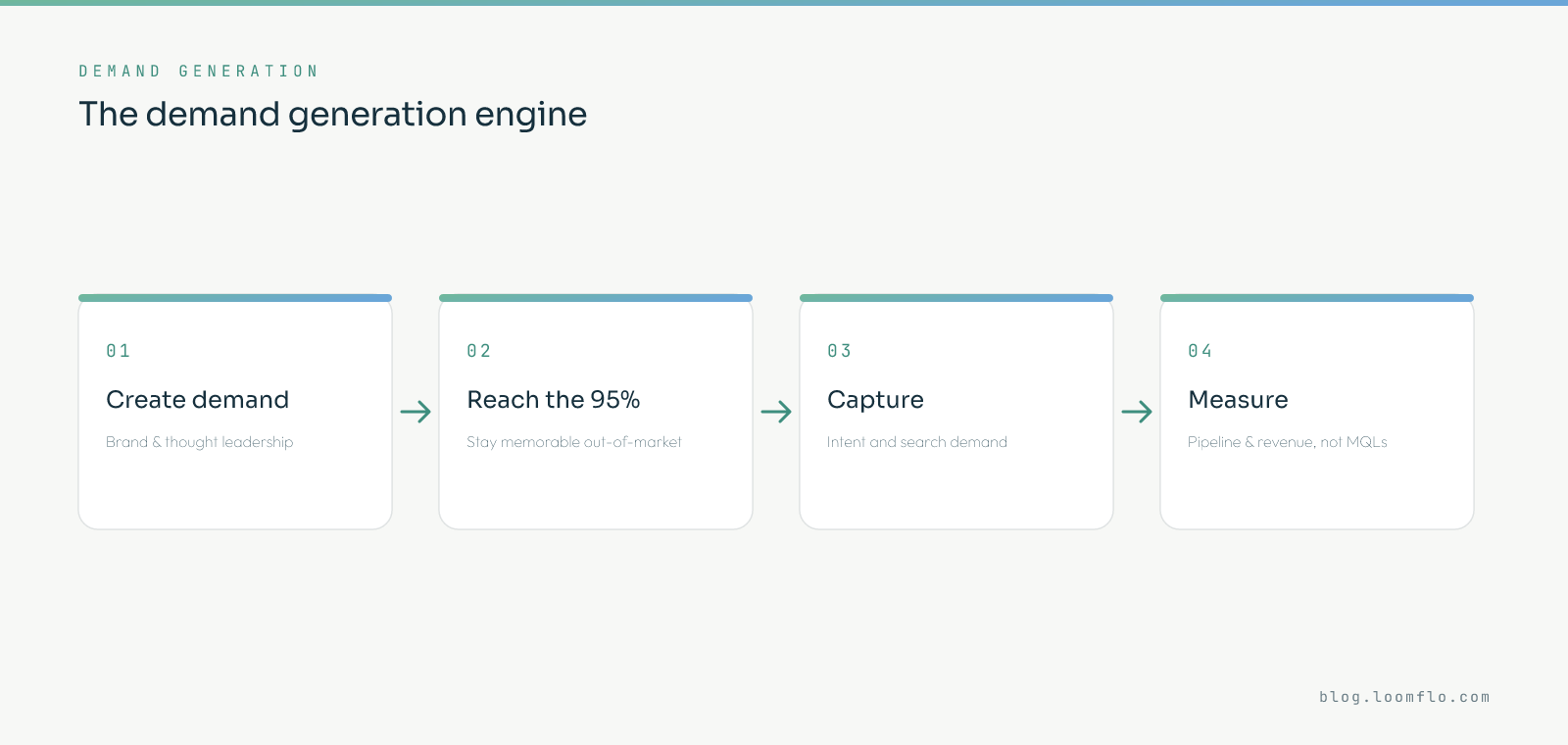
Demand generation is the practice of creating awareness and interest in your product across your whole market then capturing that demand as pipeline rather than just harvesting the buyers who are already searching. It’s about being wanted, then being found.
The distinction from lead generation matters. Lead gen captures existing demand; demand gen creates it, so there’s more to capture in the first place.
Demand generation vs lead generation
The two get conflated, but they’re fundamentally different jobs. Confusing them is why so many programs underperform.
Lead generation captures the people already looking forms, gated content, “request a demo.” It’s necessary, but it only skims the surface of the market.
Demand generation builds interest among people who aren’t looking yet, so they remember you when they are. One harvests; the other plants.
Why the 95-5 rule changes everything
The single most important idea in demand generation is the 95-5 rule. It reframes who you’re actually marketing to.
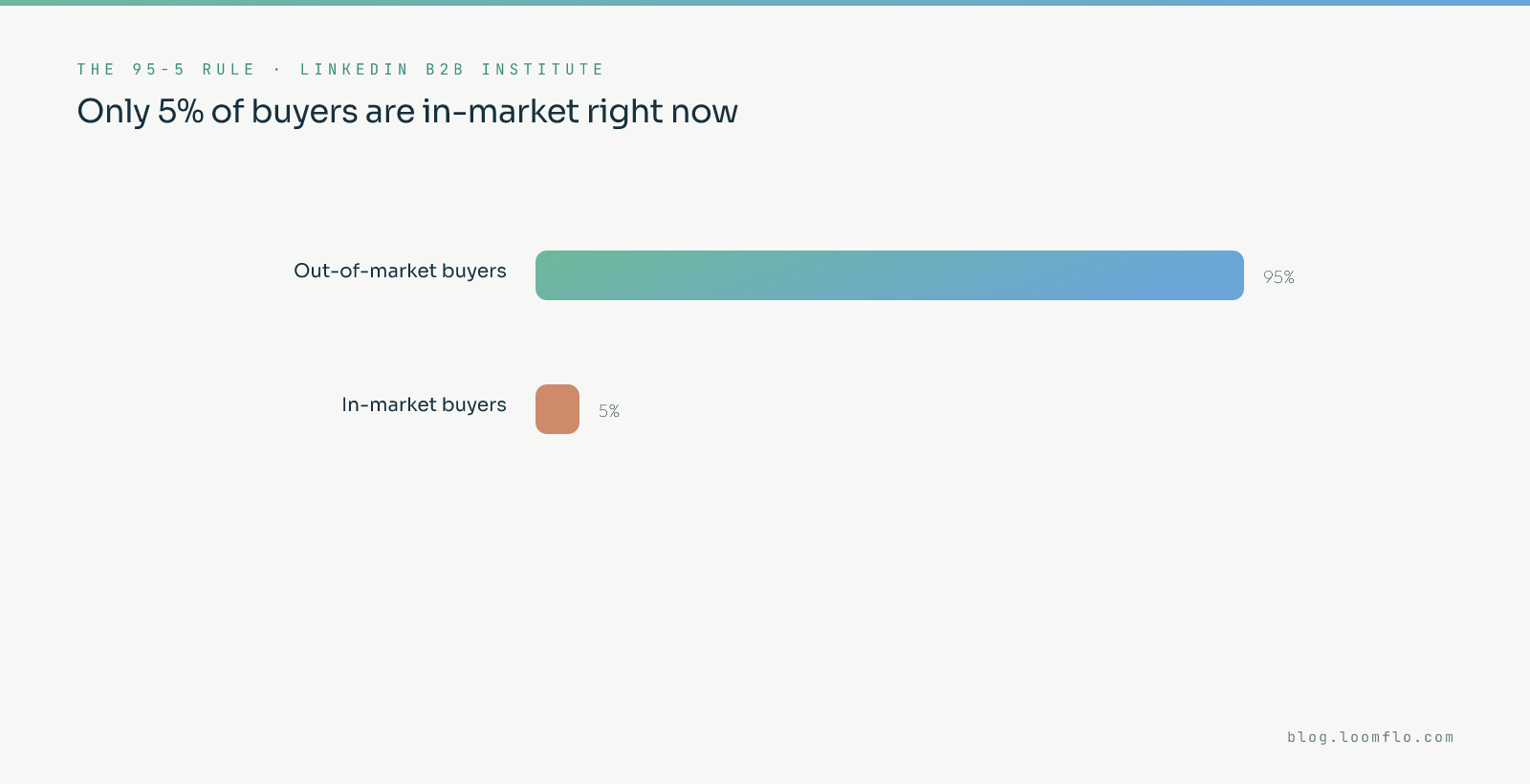
Research from the LinkedIn B2B Institute and Ehrenberg-Bass found that at any given time, only about 5% of B2B buyers are in-market; the other 95% can’t buy yet.
That has a profound implication. If you only target the 5%, you’re fighting over a sliver of demand while ignoring the 95% who decide their shortlist long before they’re ready.
The buyer decides before they talk to you
By the time a buyer contacts sales, the real work is done. The decision is largely made in the dark.
The data is striking. 6sense found buyers are about 70% through their journey before engaging a seller, and Gartner found they spend just 17% of their time with sales reps, with 67% preferring a rep-free experience.
And early position wins. 6sense found the vendor ranked first at the end of selection wins about 80% of the time, and 95% of eventual winners were on the Day One shortlist.
What actually creates demand
Demand is created by being useful and memorable long before purchase. A few things do most of the work.
1. Thought leadership
Genuinely insightful content builds trust and gets you considered. Edelman found 75% of B2B buyers say strong thought leadership made them consider a product they weren’t evaluating, and 90% are more receptive to outreach from such companies.
2. Brand building
Consistent presence makes you the name buyers recall when they enter the market. This is the asset the 95-5 rule says you must build now to be chosen later.
3. Content marketing
Helpful content across the funnel both creates and captures demand. CMI found 74% of B2B marketers say content generated demand and leads in the past year.
4. Being where buyers self-research
Most of the journey is anonymous, so discoverable, ungated content and search visibility are decisive. You have to be findable during the rep-free research that decides the shortlist.
Balance brand and demand capture
The mistake is going all-in on either creating or capturing demand. The evidence points to a balance.
Binet and Field’s research, refined for B2B with the LinkedIn B2B Institute, found the optimal split is roughly 46% brand building to 54% demand capture and that pushing brand below ~30% erodes effectiveness.
So fund both. Brand creates the demand; capture turns it into pipeline, and neither works well alone.
Target the buying group, not the lead
Modern B2B isn’t bought by a person it’s bought by a committee. That breaks the single-lead model entirely.
Gartner found a typical buying group has 6–10 decision-makers, each arriving with several pieces of independent research they share with the group. Chasing one MQL ignores the other nine people who decide.
So demand gen has to reach and enable a group, not score a contact. Content that helps a whole committee build consensus is what moves deals.
How to build a demand generation engine
A compounding pipeline is built deliberately. These are the moves the data rewards.
1. Create demand, don’t just capture it
Invest in reaching the 95% who aren’t in-market yet, so you’re remembered when they are. This is the asset that makes capture easier later.
2. Fund the full funnel
Use roughly a 46/54 brand-to-capture split, and don’t starve brand below ~30%. Both halves are required for the engine to compound.
3. Lead with thought leadership
Publish genuinely useful, distinctive content that earns trust and shortlist inclusion. It creates net-new demand, not just captured demand.
4. Be discoverable in the dark
Make content ungated and findable in search, since most of the journey is anonymous and rep-free. Gating everything hides you from the buyers who matter.
5. Measure pipeline, not MQLs
Track pipeline, revenue and shortlist inclusion instead of lead volume. Since the early favourite wins ~80% of the time, “being chosen early” is the metric that predicts revenue.
Why this pipeline compounds
The reason it compounds is that it builds an asset, not a campaign. Each piece of content and every impression adds to brand memory that pays off for years.
Long cycles make this essential. With B2B buying taking around 10 months (6sense), the demand you create today becomes the pipeline you capture next year.
That’s the opposite of a lead-gen treadmill. Stop a campaign and leads stop; build demand and it keeps producing.
Where demand generation fits
Demand generation is the strategy; content, SEO and nurturing are how you execute it. It’s the difference between renting pipeline and owning a system that compounds.
That system framing is the whole point. For why durable systems beat one-off campaigns, see our guide on Campaigns vs Infrastructure, and for the capture engine that turns demand into meetings, AI lead generation.
Built right, demand generation makes you the vendor buyers already wanted before they ever fill out a form.
How to capture the demand you create
Creating demand is only half the engine you still have to capture it as pipeline. A few tactics turn interest into opportunities.
- Search visibility: Rank for the high-intent terms buyers use when they enter the market.
- Intent signals: Spot accounts researching your category and reach out at the right moment.
- Frictionless offers: Make it easy to try, demo or talk don’t gate everything behind a form.
- Retargeting: Stay present with the warm audience your content has already engaged.
- Nurturing: Keep educating leads until they’re ready, since cycles run months.
Capture works best on top of strong demand creation. Without demand to capture, these tactics just fight over the same 5%.
Common mistakes to avoid
A few patterns keep B2B teams stuck on the lead-gen treadmill. Each one is fixable.
- Only harvesting the 5%: Chasing in-market buyers while ignoring the 95% who decide later.
- Gating everything: Hiding useful content behind forms, so you’re invisible during anonymous research.
- Chasing MQL volume: Measuring leads instead of pipeline and shortlist inclusion.
- Starving brand: Cutting brand investment below the level that makes capture work.
- Targeting one contact: Marketing to an individual instead of the 6–10 person buying group.
Avoid those and the engine compounds. Fall into them and you’re back to renting pipeline.
Demand generation metrics that matter
The metrics you choose shape the behaviour you get. Chase the wrong ones and you’ll optimise for the wrong outcome.
Move beyond MQLs to pipeline created, pipeline velocity and revenue. Since the early favourite wins about 80% of deals, shortlist inclusion and brand awareness are leading indicators worth tracking.
Watch demand-creation signals too branded search, direct traffic and content engagement. They tell you the 95% are starting to remember you, long before they buy.
Frequently asked questions
What is demand generation?
It’s creating awareness and interest in your product across your whole market, then capturing that demand as pipeline. Unlike lead gen, it builds demand rather than just harvesting existing interest.
How is demand generation different from lead generation?
Lead generation captures buyers already looking; demand generation creates interest among those who aren’t yet. Demand gen makes more demand to capture, while lead gen only skims what exists.
What is the 95-5 rule?
Only about 5% of B2B buyers are in-market at any time; 95% can’t buy yet. It means demand generation must build brand memory now so you’re chosen when buyers become ready.
Does it actually work?
Yes, being on the Day One shortlist matters because the early favourite wins about 80% of deals (6sense). Creating demand early is how you get on that shortlist.
What’s the best tactic?
Thought leadership and consistent, useful content 75% of buyers say strong thought leadership made them consider a vendor they weren’t evaluating. It both creates demand and builds trust.
How should I split brand and demand-capture budget?
Research suggests roughly 46% brand building to 54% demand capture for B2B, and not letting brand fall below about 30%. Both are needed for the pipeline to compound.
How do I measure it?
Track pipeline, revenue and shortlist inclusion, not just MQLs. Since the early favourite wins most deals, being chosen early predicts revenue better than lead volume.
How long does it take to work?
It compounds over months, because most buyers aren’t ready today. With B2B cycles around 10 months, demand created now becomes pipeline captured later which is exactly why it lasts.
Is it only for big companies?
No, it’s arguably more important for smaller challengers, since being remembered early is how you get on shortlists you’d otherwise miss. Content and thought leadership scale to any budget.
How does it relate to content marketing?
Content marketing is a primary tactic within demand generation. Demand gen is the broader strategy of creating and capturing demand; content is how much of it gets done.
How much should I invest in brand vs lead capture?
Research suggests roughly 46% brand to 54% capture for B2B, and not letting brand fall below ~30%. Both halves are needed for a pipeline that compounds.
What is the 95-5 rule?
Only about 5% of B2B buyers are in-market at any time; 95% aren’t ready yet. It means you must build brand memory among the 95% to be chosen when they enter the market.
Does it replace lead generation?
No, it expands it. Demand gen creates more demand for lead capture to convert, so the two work together rather than competing.
How long does it take to work?
It compounds over months, because most buyers aren’t ready today. With B2B cycles around 10 months, demand created now becomes pipeline captured later.
What’s the best channel?
There isn’t one the strongest programs combine thought leadership, SEO, social and email across the full funnel. Content tends to be the engine that powers most of them.
What does a demand generation team do?
It runs the programs that create and capture demand content, SEO, events, ads, nurturing and the measurement that ties them to pipeline. The goal is a compounding source of revenue, not just leads.
How do brand and pipeline marketing work together?
Brand builds memory among future buyers; pipeline captures the ones ready now. Run together, brand makes capture cheaper and more effective over time.
Build a pipeline that compounds
Loomflo builds AI growth infrastructure content, SEO and nurturing engines that create demand and capture it, compounding while you sleep.